19 Japandi Living Room Ideas That Are Calm, Clean, and Completely Stunning

You already know what you’re looking for: that rare quality of stillness a room can hold when everything in it has been chosen with intention and nothing is fighting for attention.
These 19 Japandi living room ideas bring together the Japanese reverence for imperfection and the Scandinavian love of warmth and simplicity into spaces that feel less like design projects and more like somewhere you can finally breathe.
From raw plaster and aged linen to candlelit indigo walls and golden hour light through muslin, every room here was made to be felt before it was made to be seen.
1. The Stone Hour
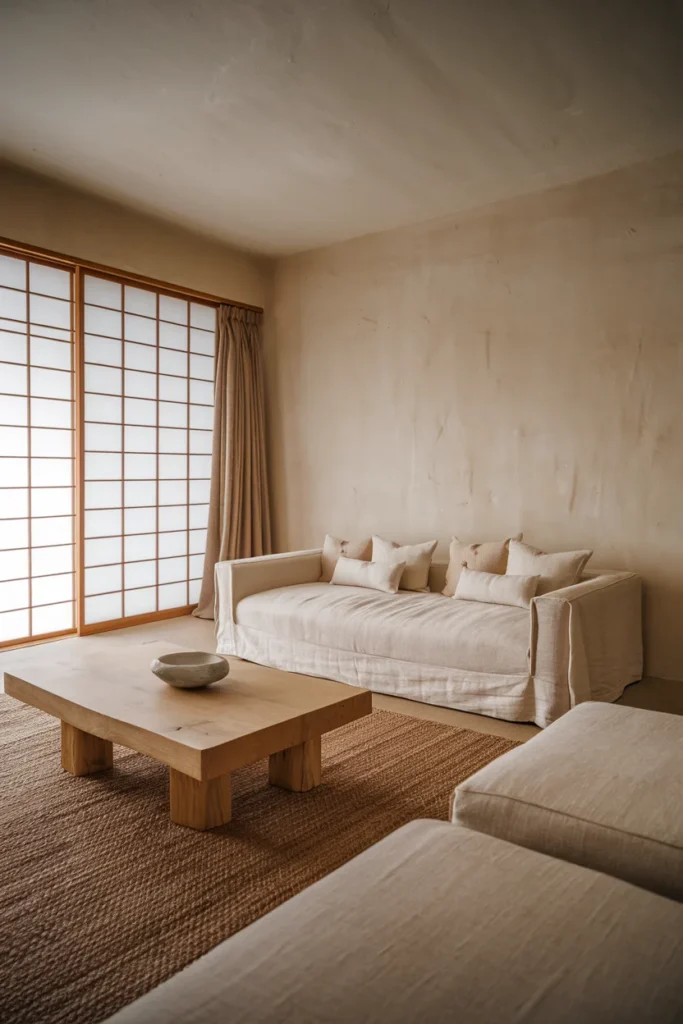
Before the day makes any demands, this is what calm looks like.
A raw plaster wall holds no art, just light moving slowly across its surface. The linen sofa sits low enough that the room feels like it belongs to the floor.
One ceramic bowl. One oak table. The restraint is the whole point. Could you live with this much quiet, and actually love it?
2. The Grain Speaks
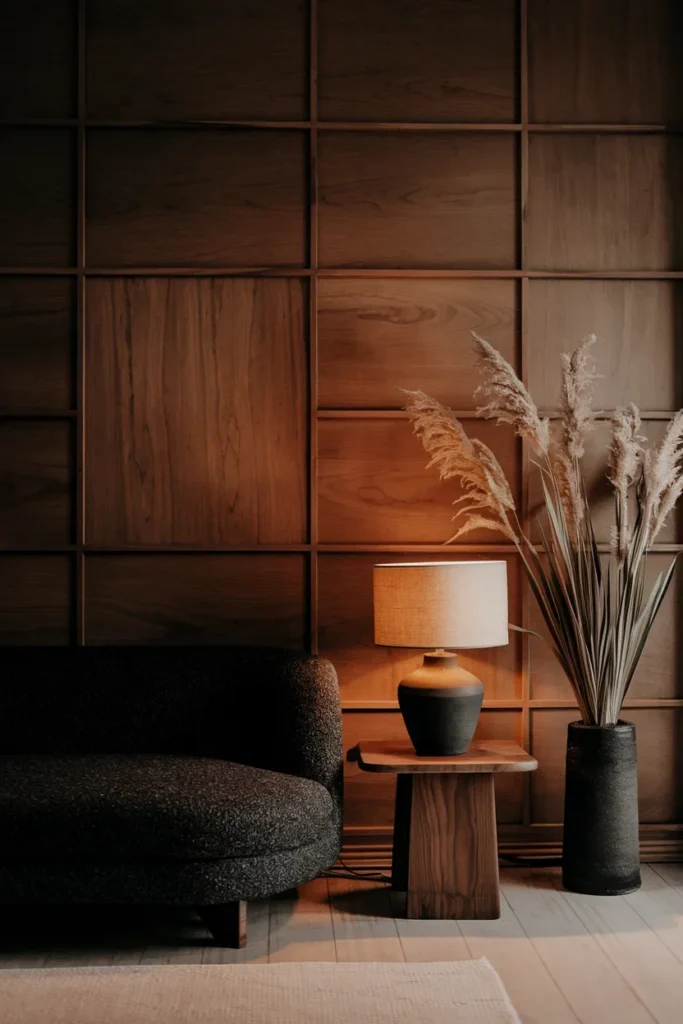
Run your eyes across that wall and you can almost feel the grain under your fingertips.
Floor-to-ceiling walnut paneling does something paint never could; it makes the room feel alive in the quietest way.
A charcoal bouclé sofa pulls the warmth down to earth. The dried pampas in a matte black vessel is the only decoration, and it’s more than enough.
Sometimes one beautiful material is the whole room.
3. Ink and Absence
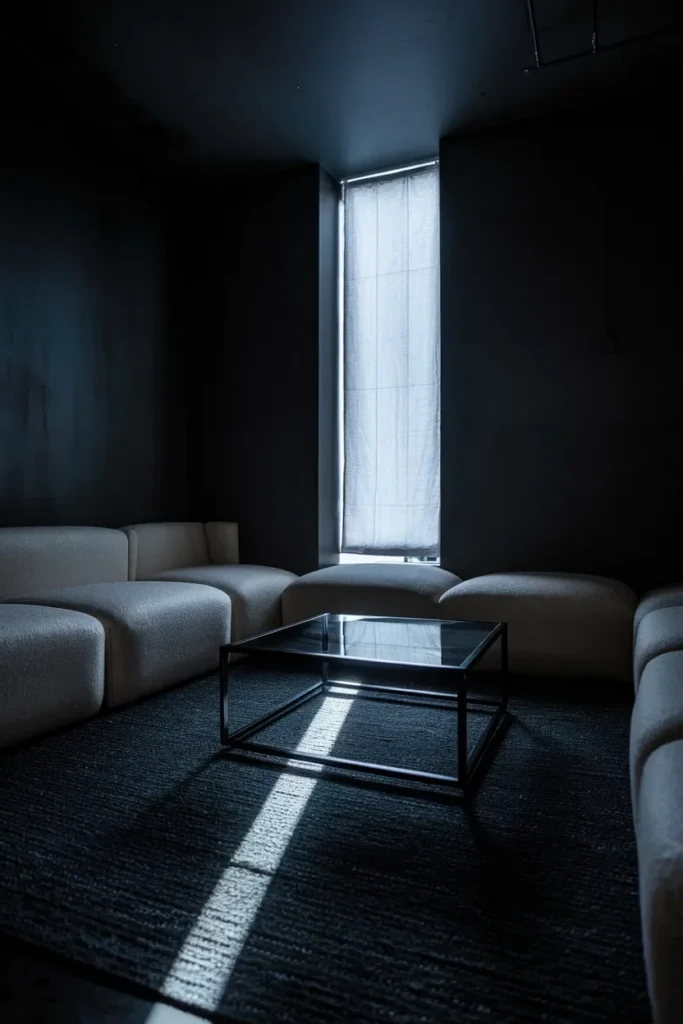
That column of light crossing the floor isn’t accidental; it’s the whole composition.
Deep charcoal limewash walls absorb sound and softness alike, making the cream wool sofa feel like something rescued from the dark.
A blackened steel coffee table sits low, without apology. This is Japandi at its most atmospheric: not sparse because it lacks ideas, but because every shadow is one.
What would it feel like to spend a Sunday afternoon in here?
4. Wabi Imperfect
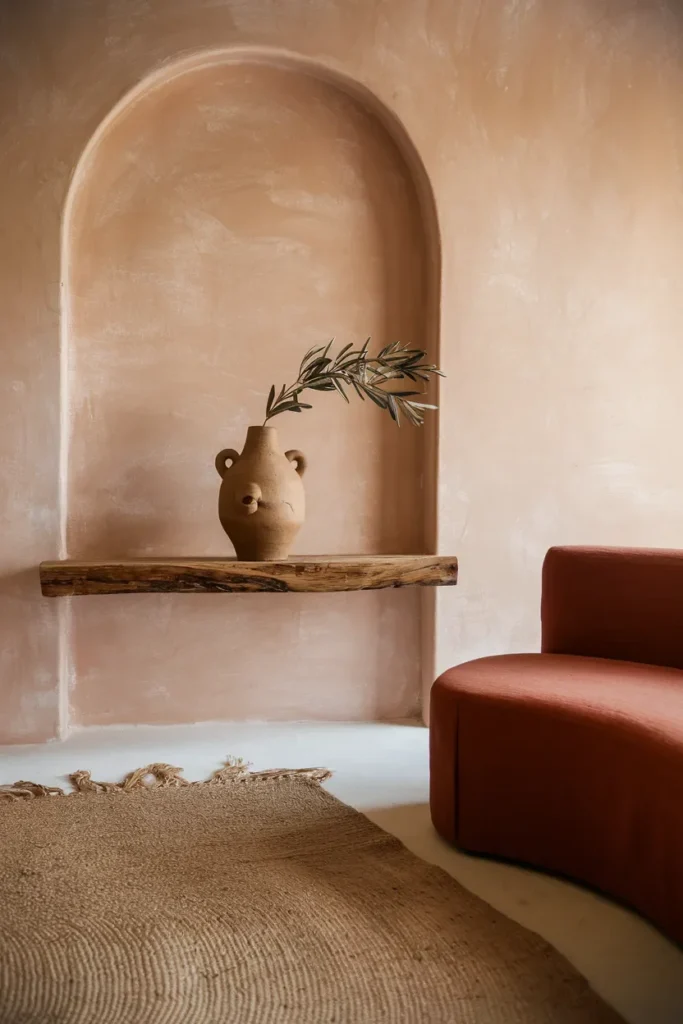
There’s a thumbprint on that vase, and it’s the most important detail in the room.
Wabi-sabi isn’t a style you buy; it’s what happens when you stop apologizing for imperfection.
The terracotta linen curves gently, the jute rug frays at the edges, and the reclaimed oak shelf holds its old saw marks like a quiet biography.
This room doesn’t perform beauty. It simply is. Can you feel the difference?
5. Low and Slow
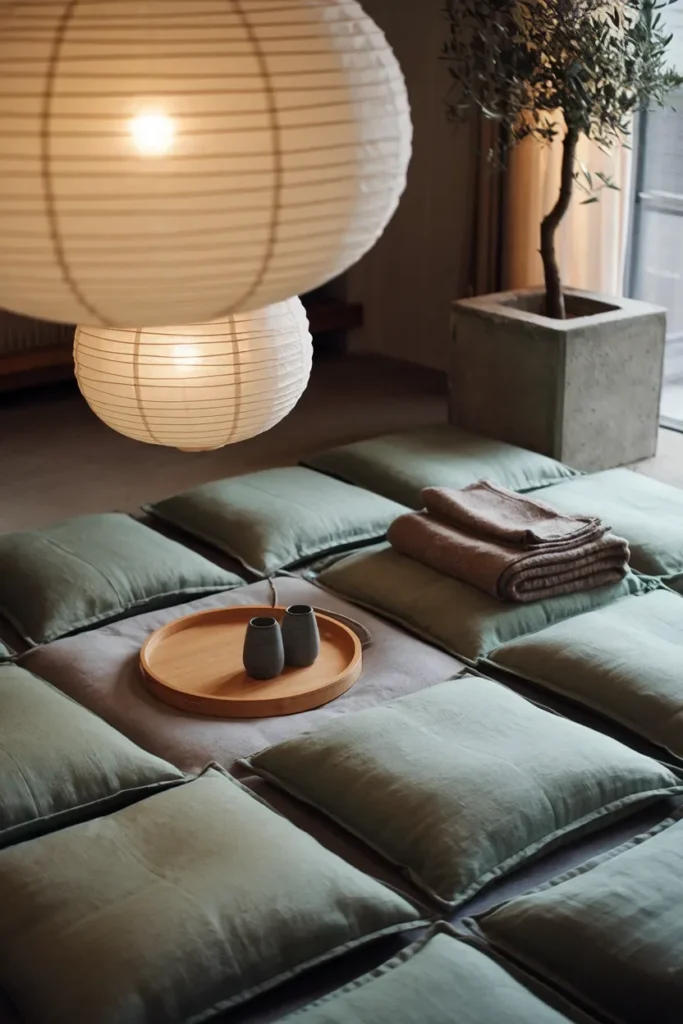
Getting close to the ground changes everything about how a room feels.
Sage linen cushions arranged loosely on a pale wood floor make a case for living at a slower altitude, legs crossed, tea cooling, nowhere to be.
A paper lantern hangs low enough to feel like candlelight. The bamboo tray holds whatever the moment needs.
This isn’t a compromise for a small space. It’s a deliberate choice for a quieter one.
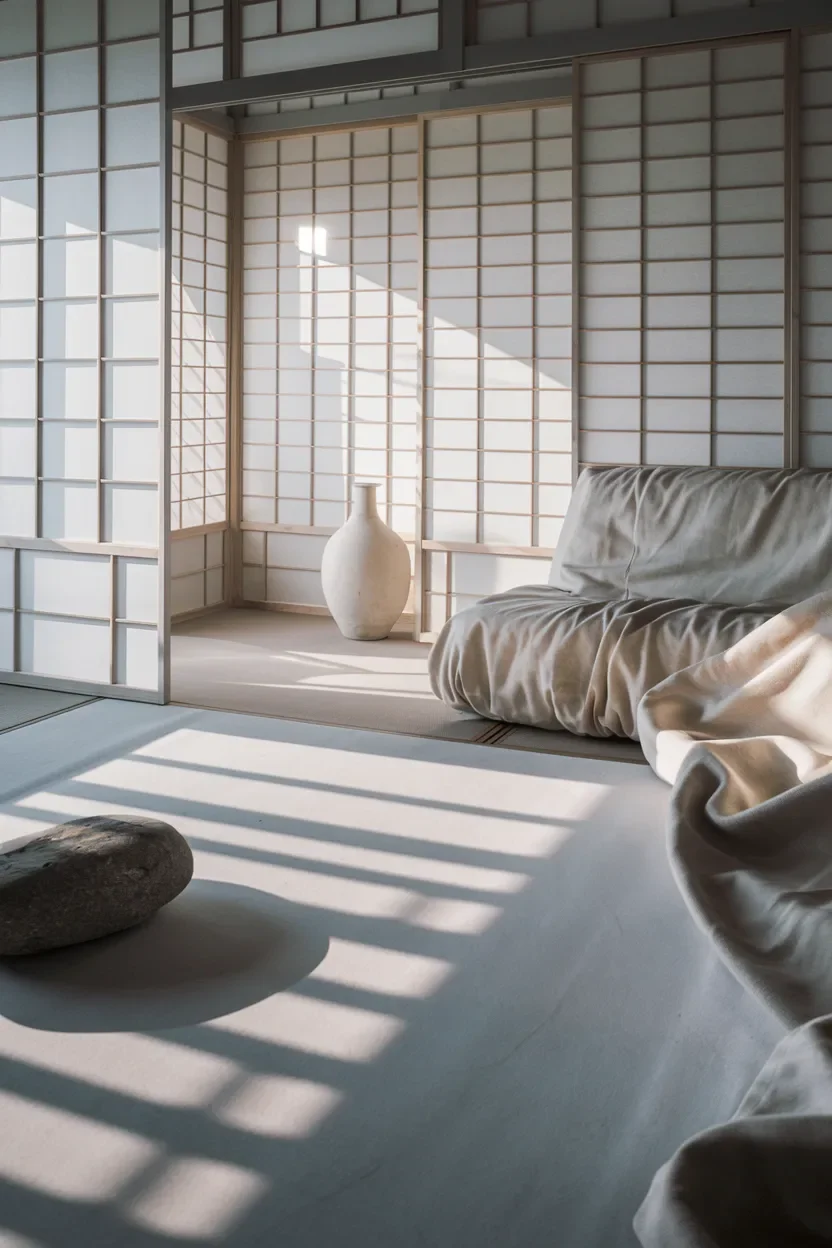
6. The Light Decides
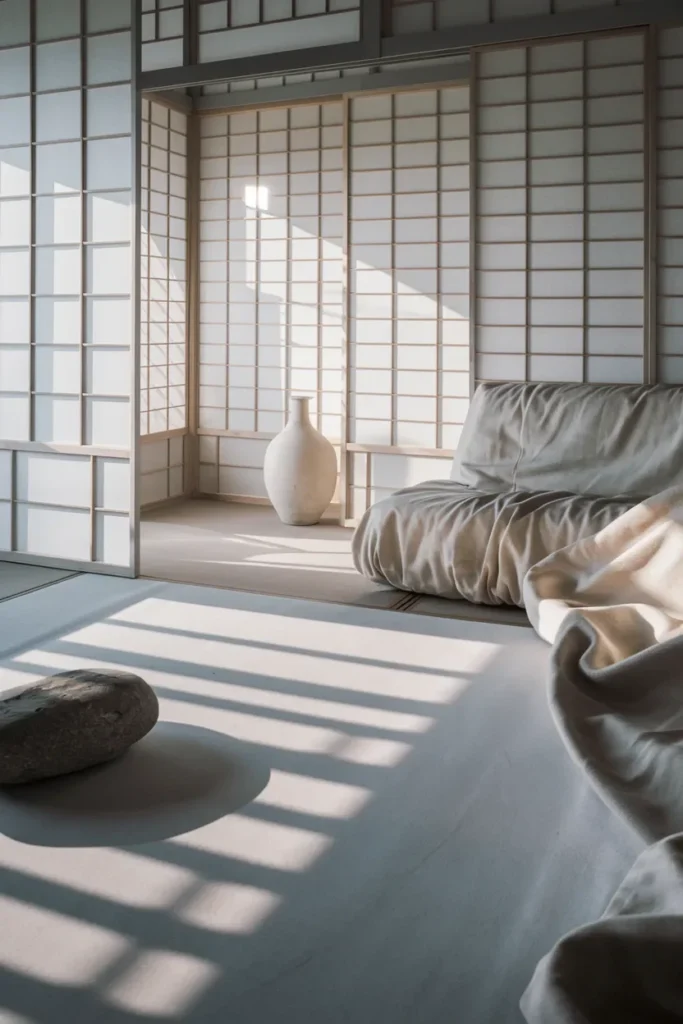
The shadows are doing all the work.
Shoji panels filter the afternoon into something quieter, a soft lattice of light moving across white oak floors as the hours pass.
The sofa in undyed canvas barely interrupts the palette. One river stone on the floor. One tall white vessel. This is a room that changes its mood every hour without you touching a thing.
Have you ever let light be your decorator?
7. The Single Branch
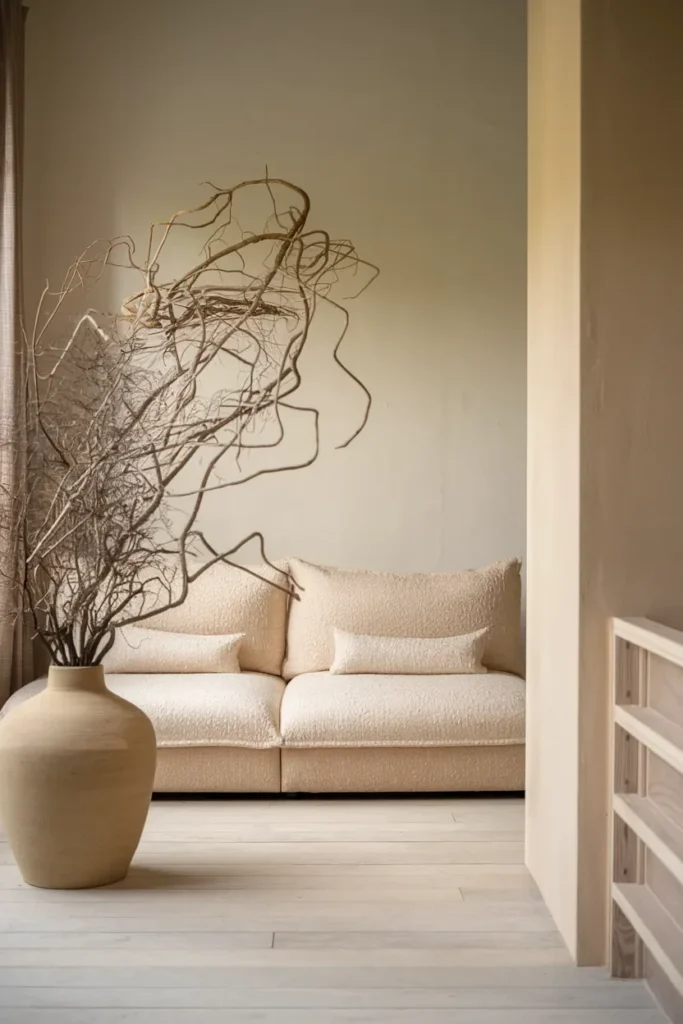
Somewhere along the way, we were told rooms needed more. More art, more cushions, more things arranged on more shelves. This room disagrees.
One dried branch in a wide sand-colored vessel casts its shadow across a bare cream wall, and that shadow is the gallery.
Warm ivory bouclé, pale ash floors, and then, nothing. Just air. Generous, deliberate, breathing air. What would you remove from your living room tonight if you could?
8. Moss and Memory
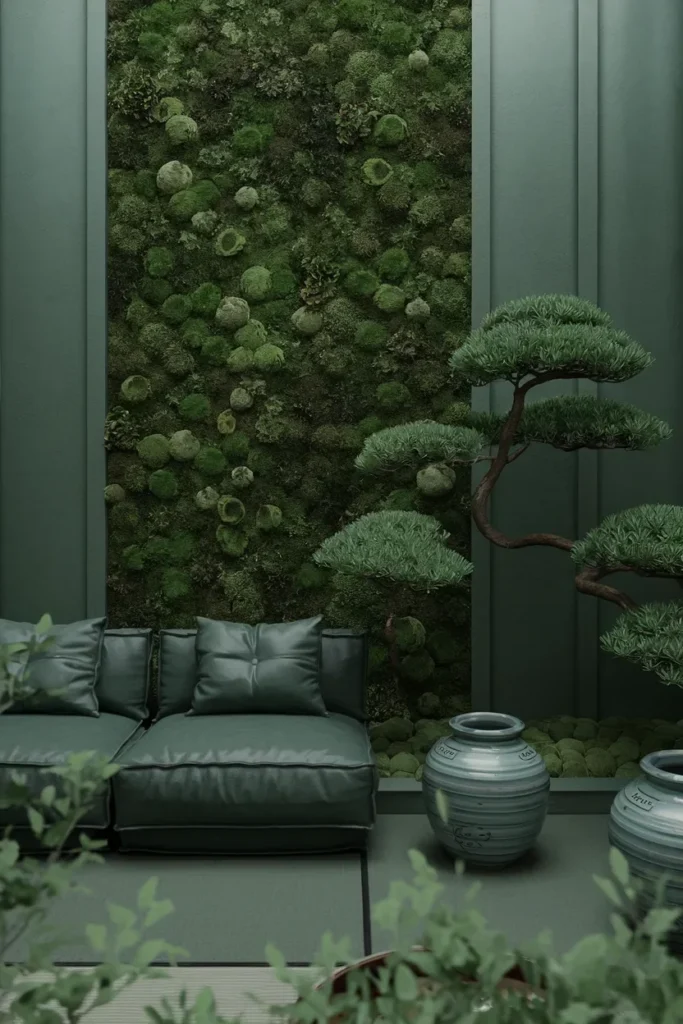
Green doesn’t decorate this room; it inhabits it.
A preserved moss panel behind the sofa blurs the line between wall and wilderness, while celadon ceramic pots hold trailing plants at floor level.
The deep forest green linen sofa doesn’t compete; it belongs. Pale sisal underfoot keeps the palette grounded in something earthy and dry.
This is what it feels like when a room breathes with you rather than at you.
9. The Borrowed Dark
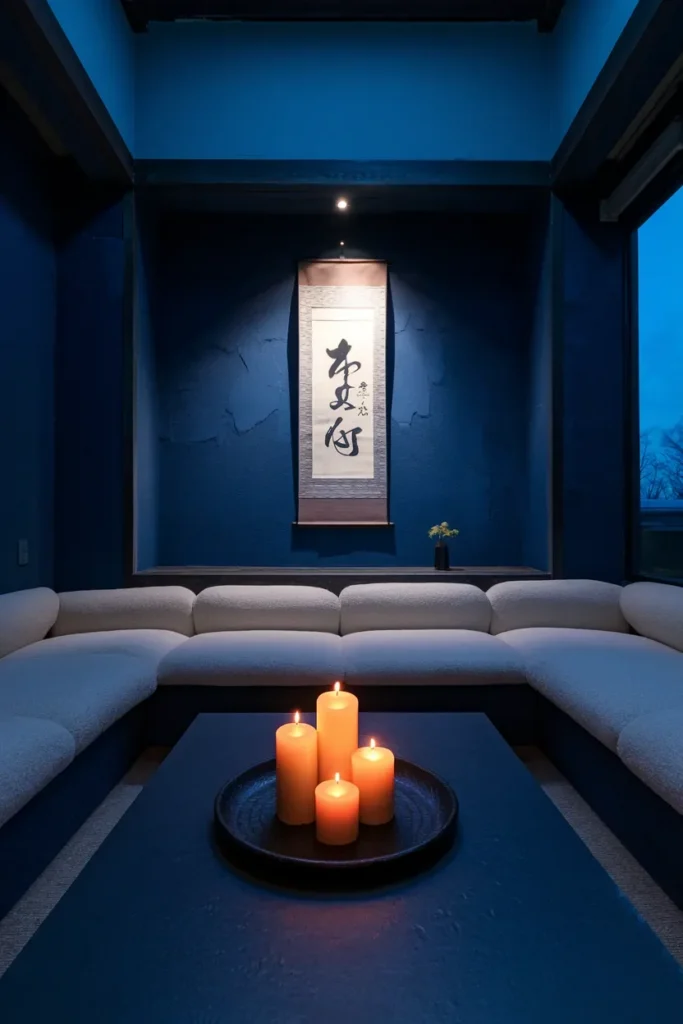
When the light drops, indigo limewash walls do something extraordinary: they deepen without darkening the mood.
Three beeswax candles grouped on a blackened iron tray throw gold across pale oatmeal wool, and for a moment the room feels centuries old and completely your own.
A single calligraphy print on the far wall. Nothing else competes.
This is the living room you light at the end of a long week and simply disappear into.
10. The Rough and the Rest
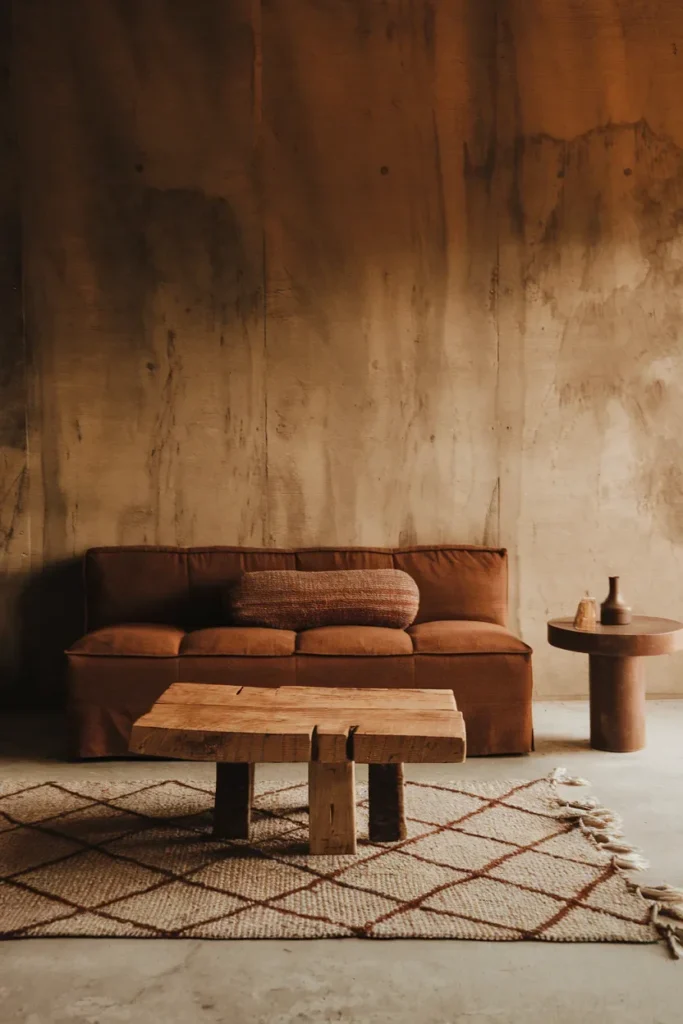
Press your palm to that wall, and you’d feel every rake mark.
Hand-raked concrete catches the afternoon light in ways smooth plaster never could, shadow collecting in the grooves, warmth gathering on the ridges.
Against it, the burnt rust linen sofa feels almost soft enough to melt into. A hand-knotted rug carries the rust tone down to the floor, tying the whole room through one honest, imperfect color.
Texture as the quietest form of drama.
11. The Pale Architect
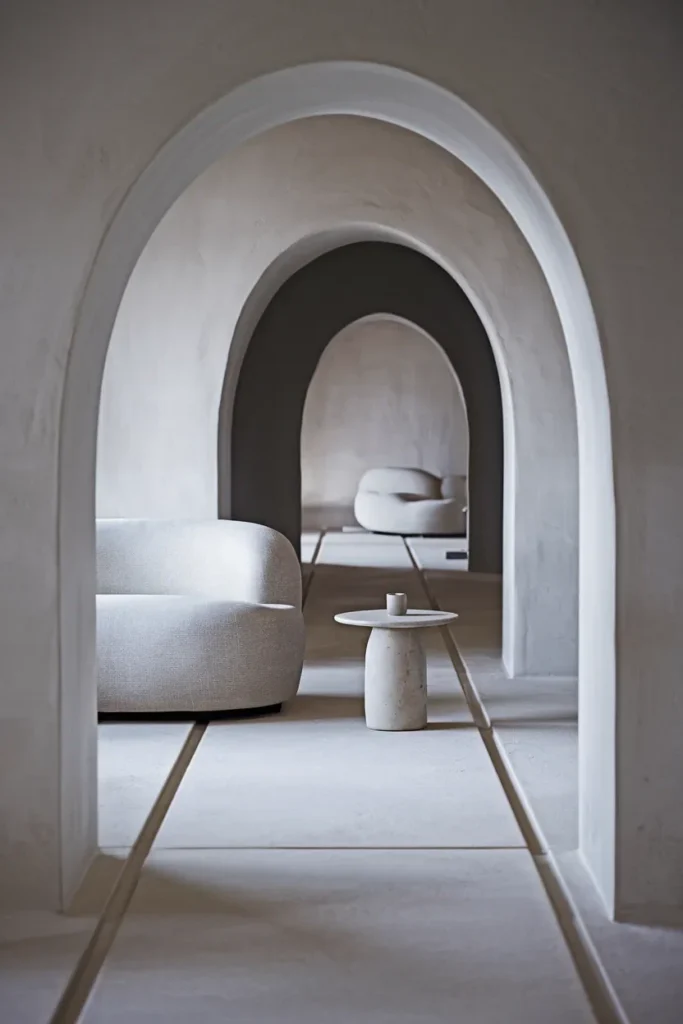
An arched doorway does something a straight-edged opening never quite manages; it softens the whole room around it.
Cool pale grey wool and continuous limestone floors carry the eye through without interruption, the space folding gently into itself.
One small ceramic cup on a fossil-marked side table is the only object with any intention. Everything else is architecture doing the quiet work.
Does your home have a moment like this one hiding somewhere?
12. Ember in the Grain
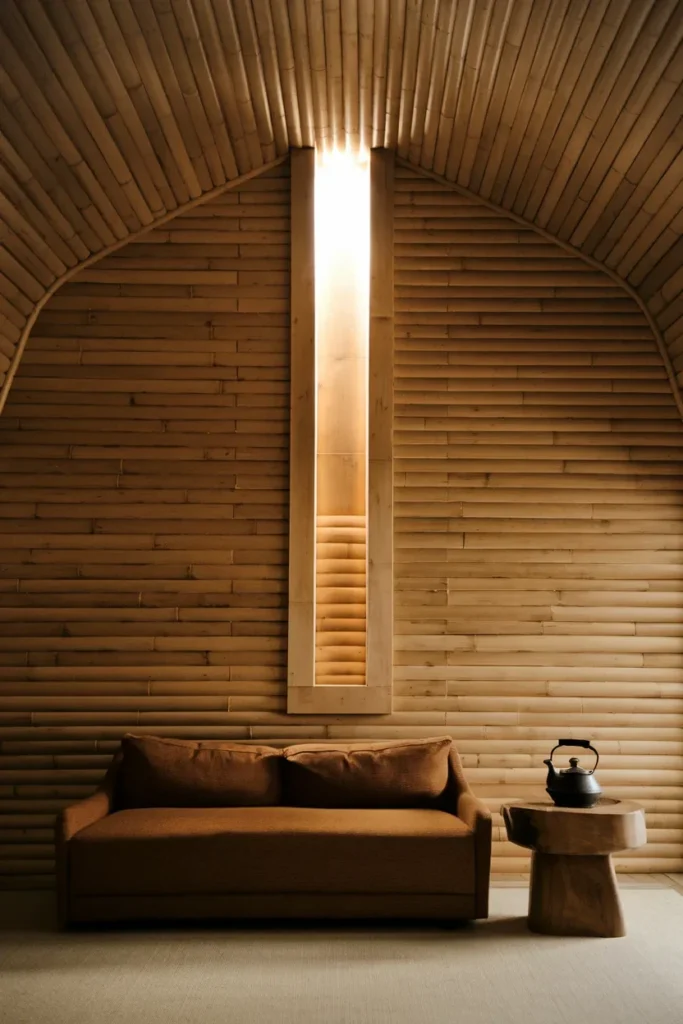
Most people forget the ceiling exists. This room makes that impossible.
Tongue-and-groove bamboo boards in warm honey run the full length overhead, pulling light down into the caramel cashmere sofa below like something between a forest and a hearth.
A cast iron tea kettle on a hand-turned teak side table completes the sensory picture: weight, warmth, and grain.
Look up more often. Some rooms keep their best detail above eye level.
13. The Quiet Threshold
One step down and something shifts.
The ebony-stained floor gives way to tatami, and the room becomes somewhere you remove your shoes without being asked.
A black walnut platform sofa sits so low it barely clears the woven rush mat. At the far wall, a sumi-e scroll holds all the art this space will ever need.
The Japanese concept of a room as a threshold, a place between the outside world and your inner one, has never felt more literal.
14. Ash and Aftermath
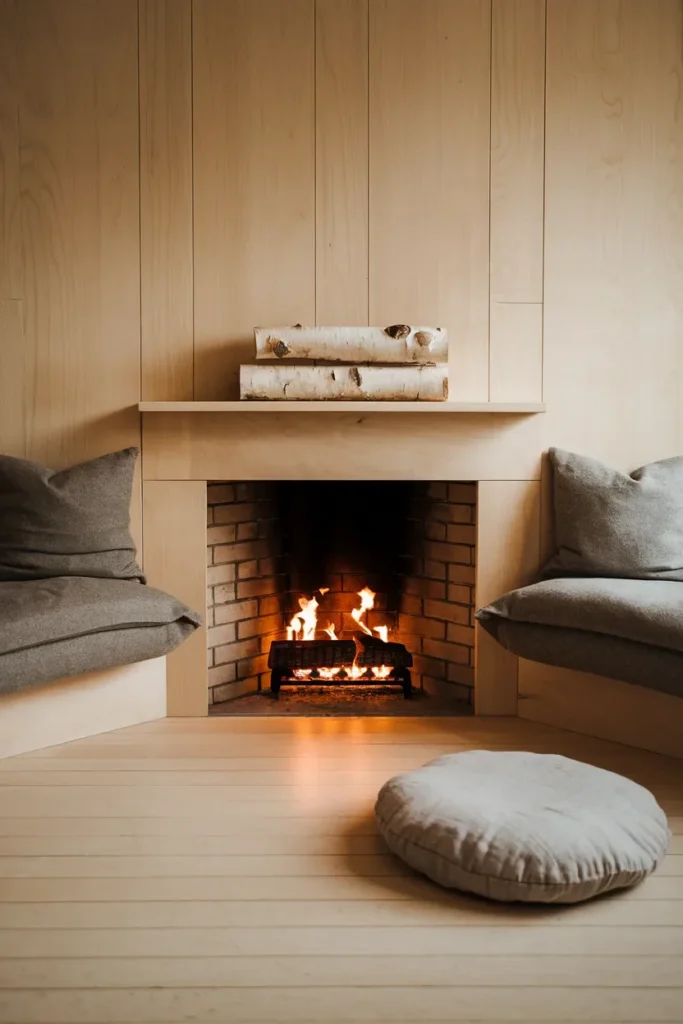
Firelight changes the physics of a room.
Pale ash wood cladding inside the alcove catches the amber glow and holds it, the grain suddenly luminous in a way daylight never quite achieves.
Three birch logs stacked on the hearth aren’t waiting to be burned; they’re sculptural, papery bark and all.
A linen floor cushion pulled close completes the picture of someone who has chosen warmth over furniture arrangements. Winter has never looked this considered.
15. The Celadon Pause
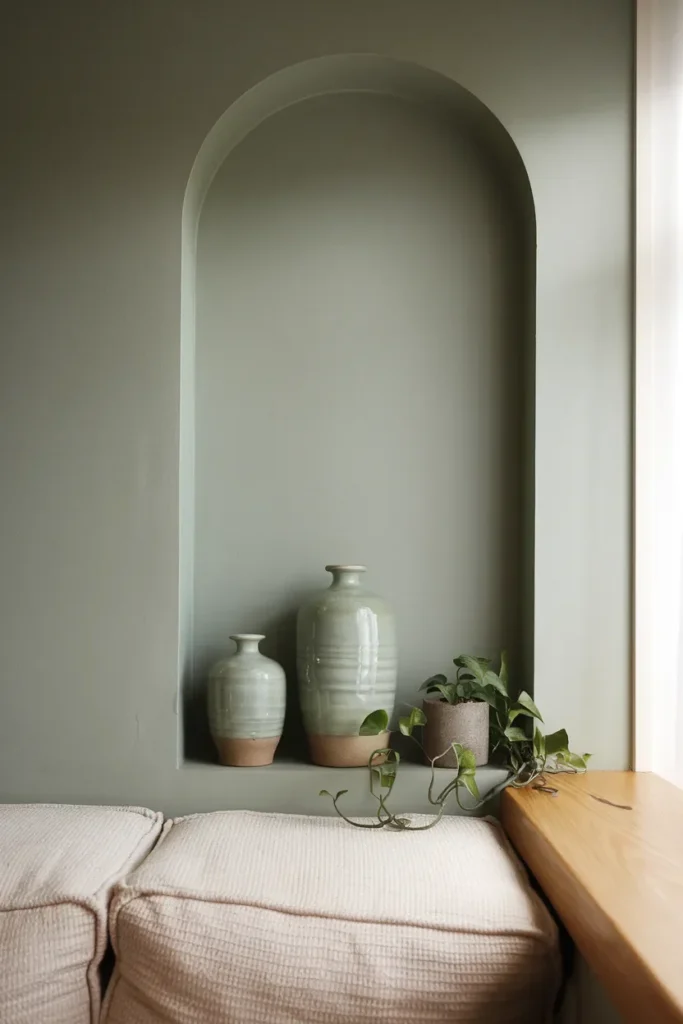
Celadon is the color of restraint making itself known.
That wall doesn’t shout; it hums, a muted green-grey that shifts cooler in morning light and warmer by afternoon.
Three hand-thrown vessels on a floating white oak shelf echo the glaze tone in slightly different registers, as the same note played softly three times.
The off-white cotton sofa faces it without competing. Sometimes the bravest design decision is one that almost whispers. Would you dare that wall color?
16. The Undone Room
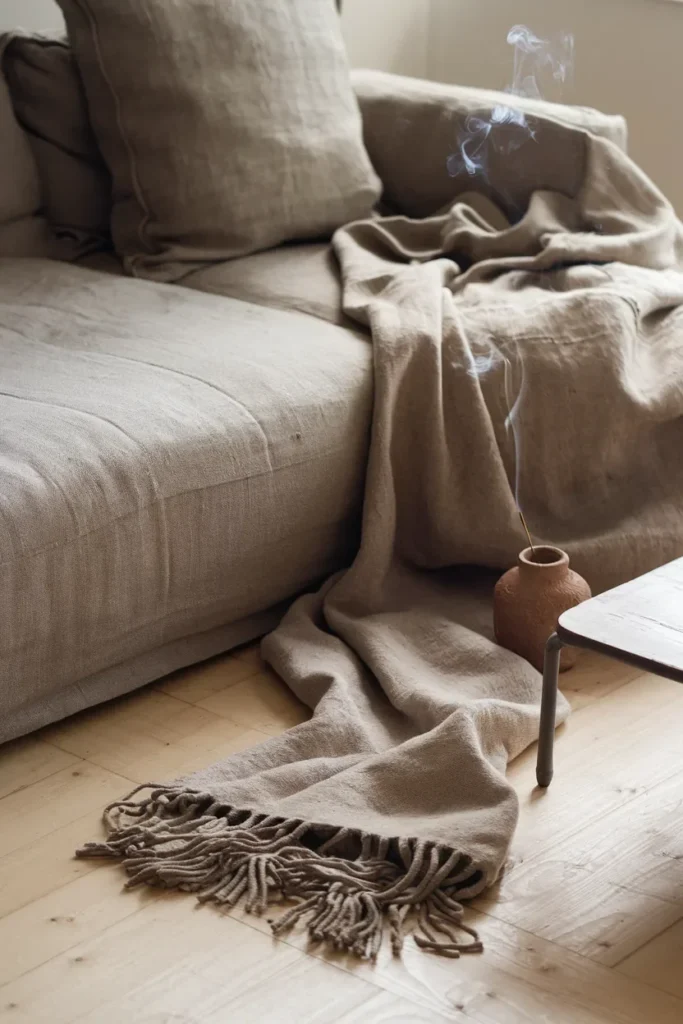
Not every beautiful room is a composed one.
Morning light drags across washed flax linen, catching every thread and wrinkle like it has something to say about them. The wool throw has slipped half to the floor, and nobody has fixed it.
A thin ribbon of incense smoke rises from a pinched ceramic holder on the coffee table. This is the Japandi version of effortless, not careless, but unbothered.
The kind of room that makes you want to stay in it before it gets tidied.
17. The Mineral Room
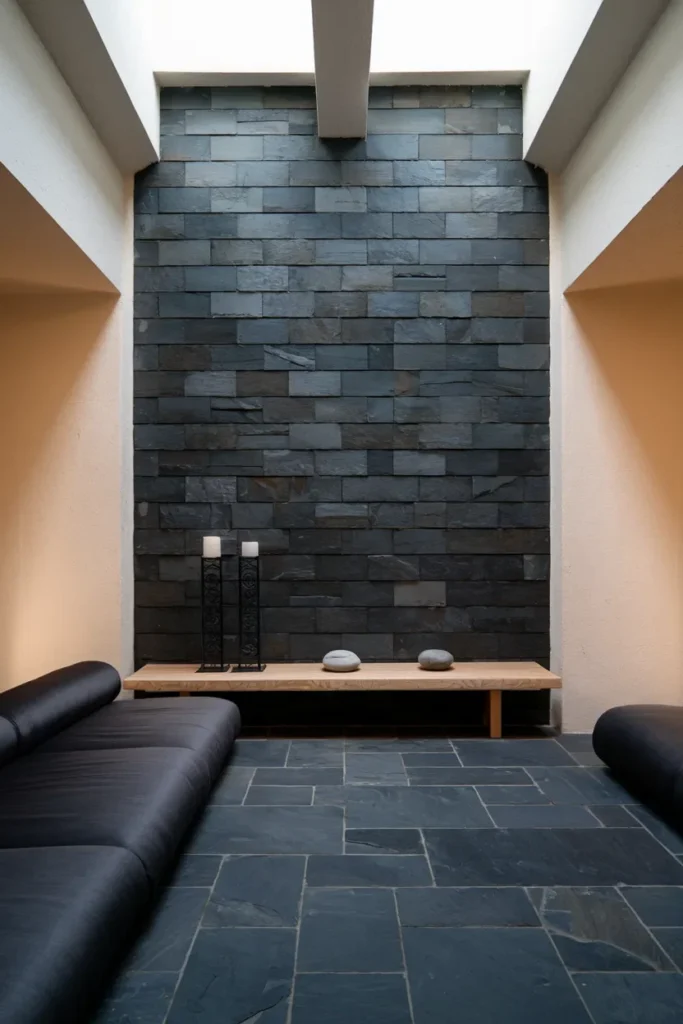
There is something in a slate wall that no paint color will ever replicate, a geological patience, a surface that formed over millions of years and now simply stands in your living room holding candles.
Deep iron grey riven tiles catch skylight in their cleft edges, every surface unique and unbothered. The graphite sofa and white oak console refuse to compete.
This room doesn’t follow a mood board. It follows something older and more permanent than taste.
18. Two Chairs, No Waiting
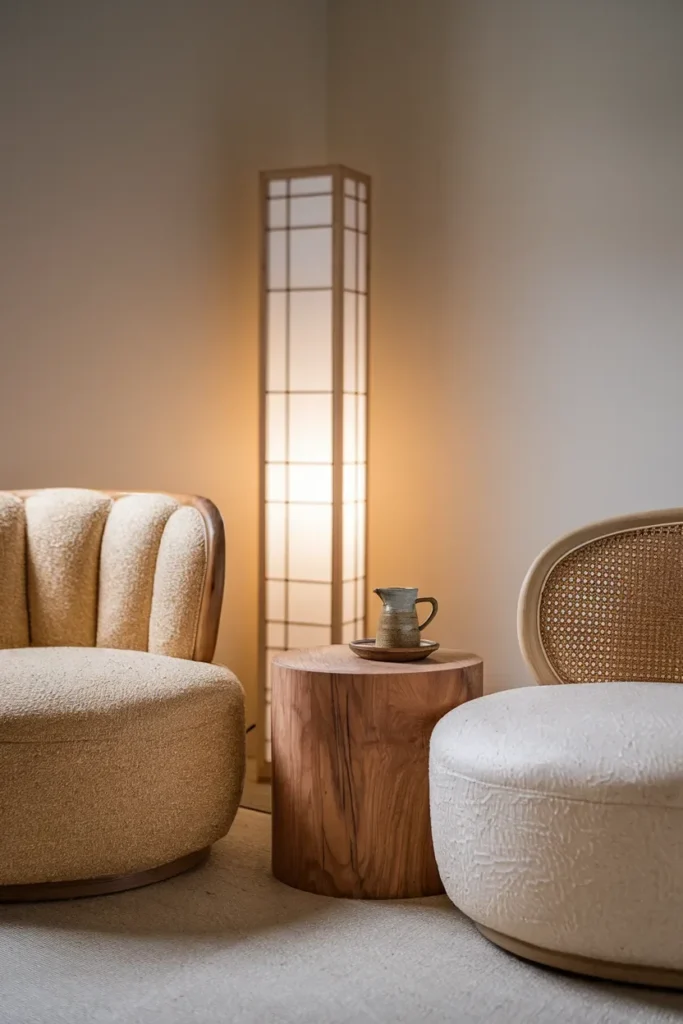
A sofa asks you to sit beside someone. Two chairs ask you to face them. There is a real difference.
Warm sand bouclé beside natural rattan, a ceramic pour-over between them on a hand-oiled teak drum, a shoji floor lamp making the corner feel like its own small world.
This is the Japandi answer to the conversation pit, intimate, grounded, and arranged as if someone very deliberate about their mornings designed it.
Who would you put in the other chair?
19. The Room That Stays
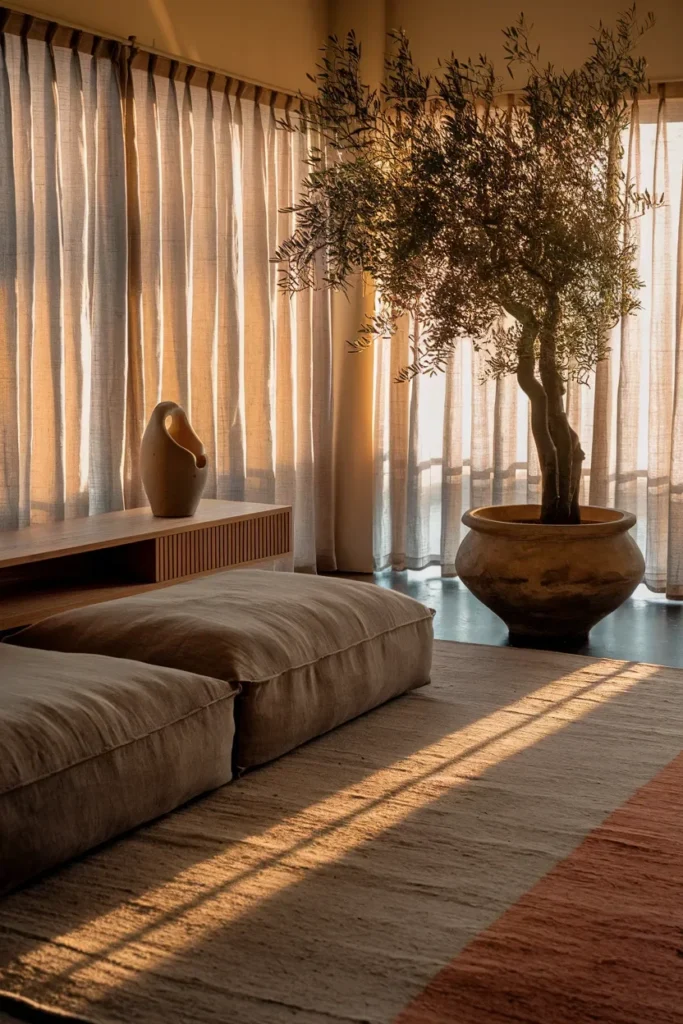
Late afternoon does something to a room like this that no lighting fixture can recreate.
Golden hour presses through unbleached muslin curtains and lands on aged taupe linen, on a hand-knotted ochre rug, on the raw clay of a planter holding an olive tree going amber at the tips.
The whole room holds it for exactly an hour. This is the version of your home you close your eyes and picture when you need to feel grounded.
Some rooms don’t just look beautiful, they stay with you.
Your instinct toward calm is not a preference; it’s a form of self-knowledge, and these rooms understand it. Japandi living spaces ask nothing loud of you.
They simply hold their quality quietly and wait for you to catch up. The ones that stayed with you after scrolling are the ones worth listening to.